 Peachland
development/building
Ponderosa (Peachland)
Hillside townhomes under Pincushion with a golf plan in waiting
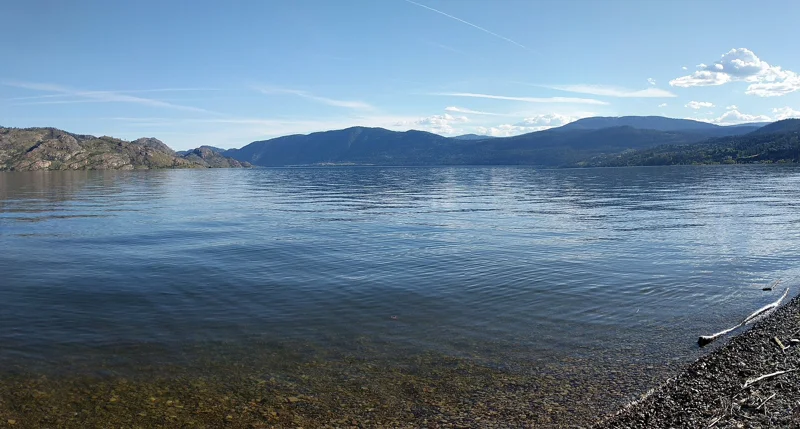
Off the coast of Peachland · regional photographPEACHLAND / YOUR NEIGHBOURHOOD GUIDE
A small town lakefront main street with sunsets on the side
These are research starting points, not confirmation of catchment, admission or availability.
Peachland is a lakeside district municipality south of West Kelowna. Manitoba developer John Moore Robinson promoted an irrigated land subdivision here in 1897 and named it for its fruit. A post office followed in 1898, the town incorporated on January 1, 1909, and its eight sided 1910 Baptist church now holds the museum.
Peachland sits on a sunny stretch of Okanagan Lake's west shore, on the territory of the syilx people. Before it had a town name, a mining camp here was called Camp Hewitt, after Augustus (Gus) Hewitt, a prospector and logger in the early 1890s. The Canadian Pacific Railway, a spur line to Okanagan Landing in 1892 and the launch of the steamer SS Aberdeen in 1893 opened the valley to settlers. John Moore Robinson, a developer from Manitoba, promoted a land subdivision with an irrigation system in 1897 and named the place for its fruit growing. The Canadian Encyclopedia says he chose the name after tasting peaches grown in the area. The Peachland post office opened on December 1, 1898, and by then the town had its first schoolhouse, which still stands. On January 1, 1909, Peachland, with about 200 people, incorporated as a district municipality.
The next year volunteers built the eight sided Baptist church. It closed as a church in 1964, was declared a BC heritage site in 1981 and now houses the Peachland Museum, run by the historical society formed in 1980. Fruit, logging, sawmills and mining carried the local economy, and the Brenda Mine, an open pit copper mine, operated for about 20 years from 1970. Peachland marked its centennial in 2009, and close to 6,400 people live here today. Homes step up the steep hillside behind Beach Avenue, so lake views are common. The 2021 Mount Law fire brought evacuations to parts of the community, and in 2024 the district adopted a tree protection bylaw built on FireSmart principles. Above town, the stalled Ponderosa golf course development remains the largest planned change.
Older cottages near Beach Avenue, hillside lake view homes stepping up the slopes, waterfront and near lake condos, and newer townhomes such as those at Ponderosa. Mostly freehold detached homes, with strata condos near the water.
Building age, tenure, amenities and permitted uses vary by address. Explore the actual property documents with Elaine and the appropriate specialists.
John Moore Robinson promoted the townsite and irrigation system in 1897, and the post office opened in December 1898. Some sources give 1899 as the founding year. Peachland incorporated on January 1, 1909.
Founder John Moore Robinson named it for its fruit growing; the Canadian Encyclopedia says he chose the name after tasting peaches grown there.
The former Peachland Baptist Church, built in 1910. It closed as a church in 1964, became a BC heritage site in 1981 and now houses the Peachland Museum.
Editorial research supplied September 30, 2026. Historical accounts can differ; development references describe the research date and do not confirm current approvals or completion. Detailed origin stories have been held back where the supplied research identified insufficient evidence.
Regional outings, not amenities within this neighbourhood. Travel depends on your starting address, route and winter road conditions.
bigwhite.com · winter activities
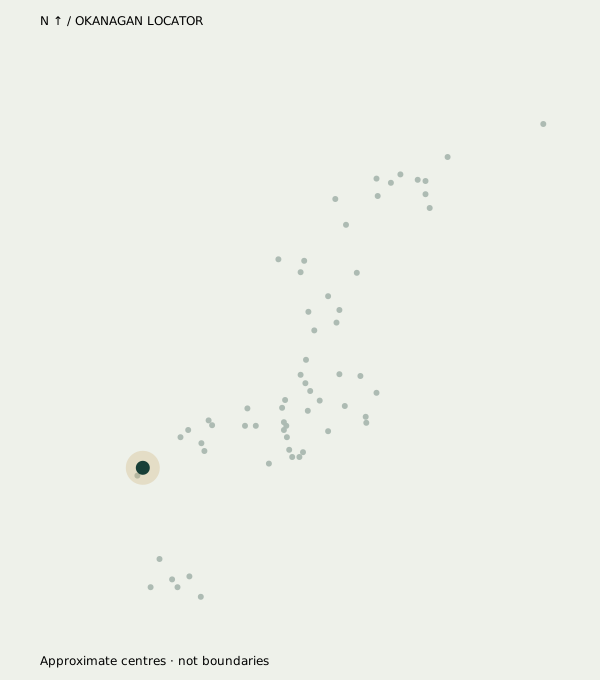
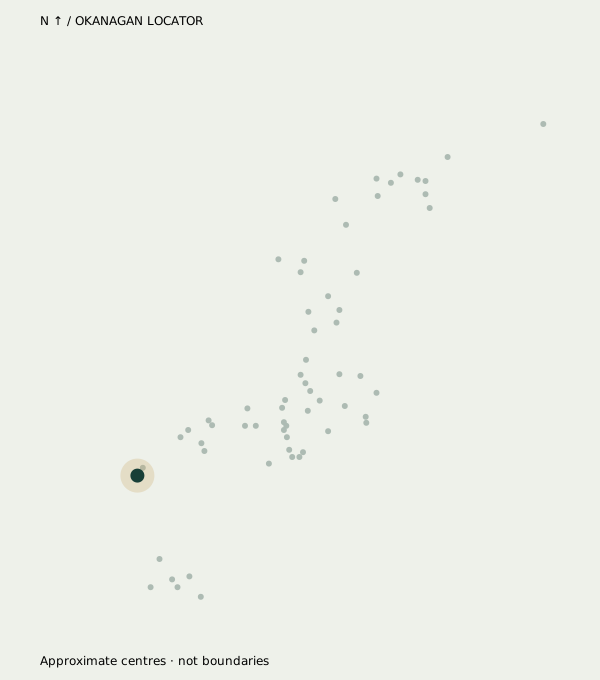
This editorial guide draws on the supplied neighbourhood research. Amenities, businesses, dog rules, development plans and access can change. Confirm details with the operator, municipality, school district and property documents before relying on them. Map areas and centres are approximate; they are not legal boundaries or catchments.
YOUR NEXT CHAPTER IS PERSONAL
You bring the possibilities.
Elaine helps make the plan.